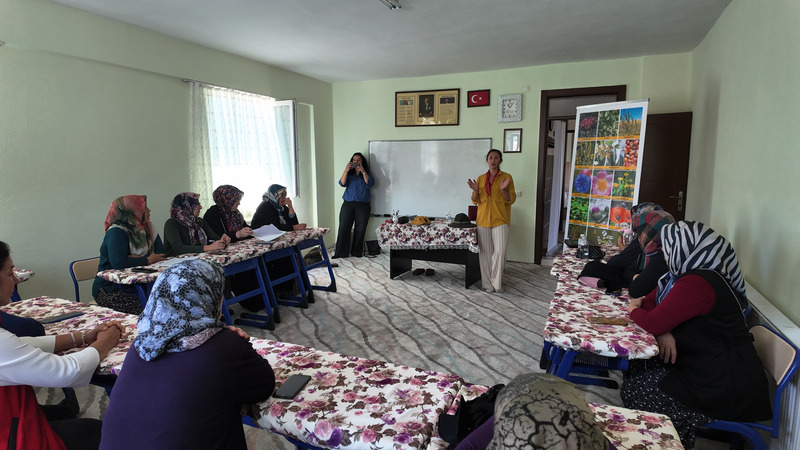
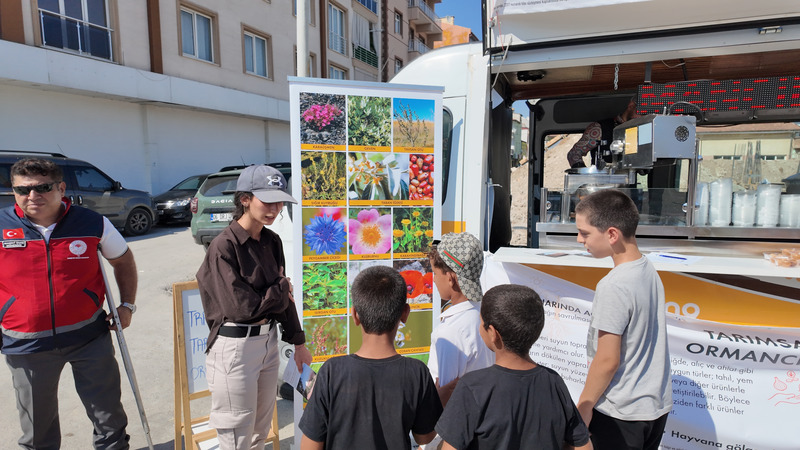
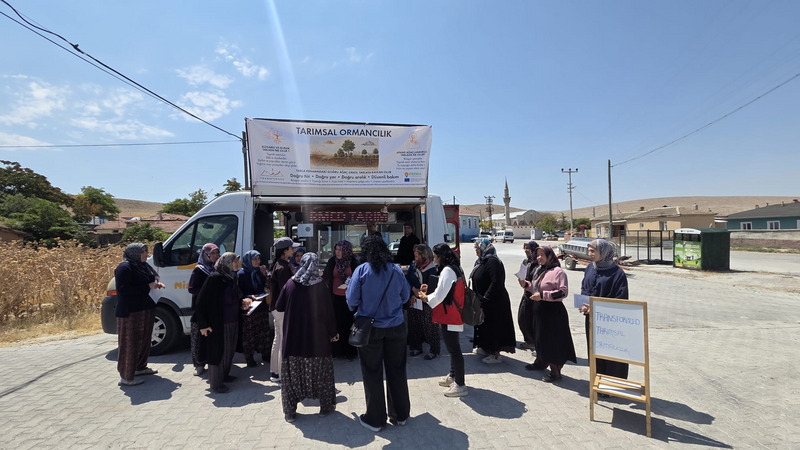
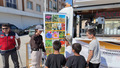
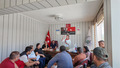
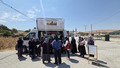
As part of the preparation for the Caravan events, Nature Conservation Centre (DKM) and Bahri dağdaş ınternational Agricultural Research Institute (BDIARI) have developed visual aids and educational materials to be distributed during the visits. These included an information flyer about the TransforMed project, an illustrated roll-up on biodiversity, agroforestry banners, locally collected plant specimens, and simple soil and water demonstrations. In addition, a 10-minute pre-recorded audio message on agroforestry was played through the sound system integrated into the Caravan vehicle.
Moreover, to attract people's attention, traditional "lokma" were served from the Caravan where the project was being presented; the project's activities were introduced, and questions regarding agroforestry were answered. Moreover, lokma is a traditional sweet prepared and distributed free of charge as an act of charity and communal sharing was served from the Caravan. This welcoming tradition created an informal setting in which the team introduced the project and answered questions about agroforestry, helping them engage people who might not normally attend a formal meeting.
The topics covered focused primarily on agroforestry and, in particular, on windbreak systems designed to reduce wind erosion, one of the most serious challenges facing local agriculture. While windbreaks represent a relatively simple form of agroforestry, reintroducing trees into the largely treeless agricultural landscape of the Central Anatolian steppe is itself an important step forward. The project therefore presents windbreaks not as an endpoint, but as a practical entry point for developing more diverse and integrated agroforestry systems over time. Discussions also explored the region's potential to support greater plant and animal biodiversity and the ways in which more complex agricultural systems can provide multiple ecological and productive benefits. The content was adapted at each stop to reflect local concerns, including water scarcity, pasture management, tree maintenance and the selection of suitable tree species.
Who are the participants?
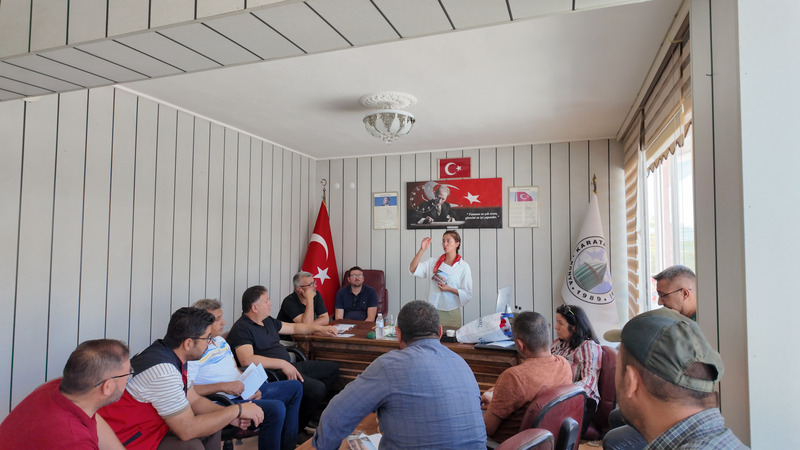
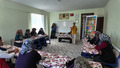
Participants included farmers, livestock keepers, women involved in agricultural production, landowners (including people living abroad), local politicians, village heads (mukhtars), agricultural engineers working locally, representatives of public agriculture and forestry institutions, researchers, children, market visitors and festival participants.
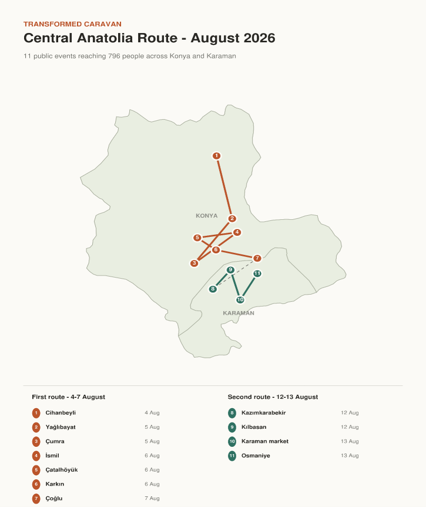
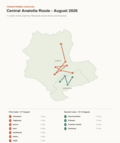
Across 11 events, the Caravan reached 796 people!
Initial reactions!
Initial reactions were highly positive, and the Caravan activities encouraged active, two-way dialogue. Participants connected agroforestry with challenges they experienced directly, particularly wind erosion, water scarcity, pressure on pasture conditions and the loss of trees along field boundaries. They showed strong interest in windbreaks and drought-adapted tree species as a practical and locally relevant first step towards bringing trees into agricultural landscapes, while also raising practical questions about access to seedlings, public support, tree planting permits and long-term tree maintenance. Participants' local observations and memories added valuable context to the discussions and revealed clear interest in developing agroforestry practices adapted to local conditions.
 tap and then scroll down to the Add to Home Screen command.