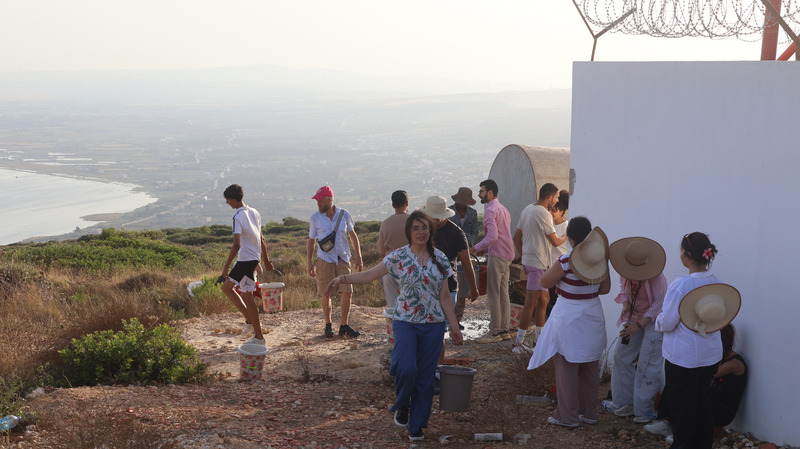
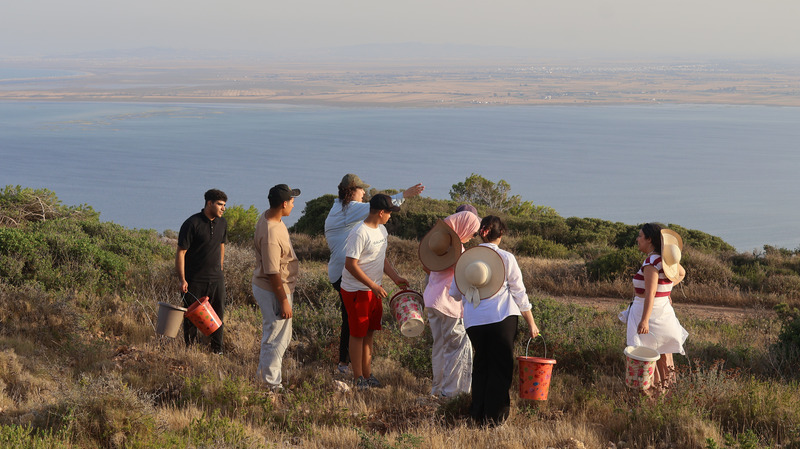
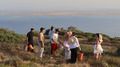
Rather than a typical agricultural group, the young people mobilized were trainees in bakery and pastry-making, a program run by partner association APES, young people in professional reintegration, often from disadvantaged backgrounds, many discovering a forest environment for the first time. On the first day, seventeen young people attended the training session, split into two groups to encourage discussion and participation. The following day, on-site, 22 people took part: 16 trainees, 4 members of the CAPTE team, and 2 chaperones.
The first day laid the ecological groundwork: why plant trees, how water circulates within a tree and in the soil, and best irrigation practices. The site's two main species, carob (Ceratonia siliqua L.) and Aleppo pine (Pinus halepensis), were introduced, with a direct link drawn to the participants' own training, since carob pods are used in baking and pastry-making, sparking strong interest from the group.
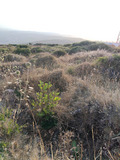
The next day, the group departed toward the site. On rugged scrubland terrain where hoses couldn't be used, irrigation was done entirely by hand, watering can and bucket by bucket, drawing from a 4,000-liter tank, at roughly 10 liters per sapling (almost 250 plants irrigated).
Key takeaways
- Manual, tree-by-tree watering, gave participants direct contact with each sapling and reinforced the ecological restoration techniques learned on the first day.
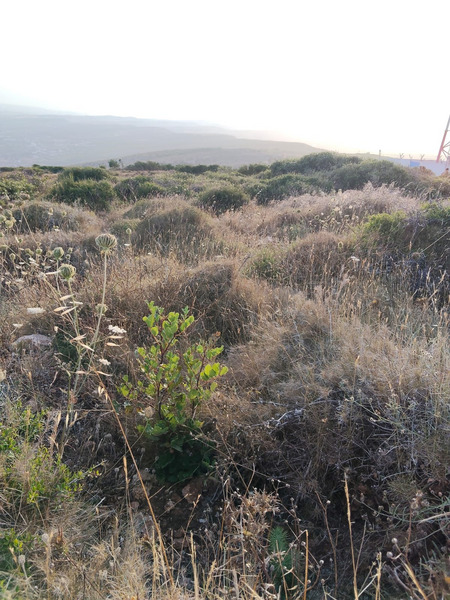
- Walking the site also offered good opportunity for saplings observations: general plants assessment and identification of signs of recovery from the summer heat.
- Participants unanimously enjoyed the teamwork, mutual support, and discovery of a natural setting many had never experienced, highlighting the strong social value of the activity.
This initiative demonstrates a clear commitment and approach: the success of restoration projects does not only rely in technique, but in personal engagement and ownership by local communities, including those furthest removed from rural life.
 tap and then scroll down to the Add to Home Screen command.