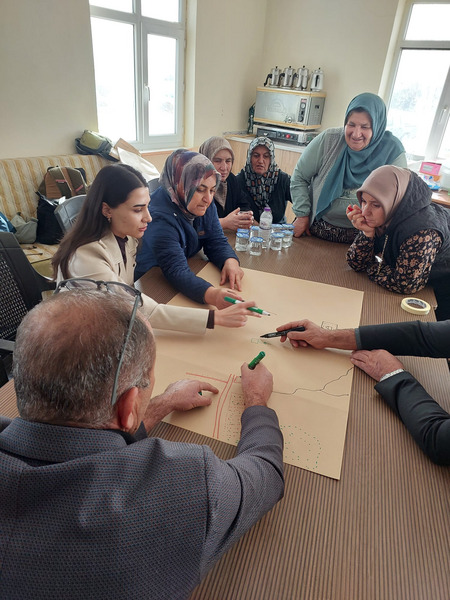
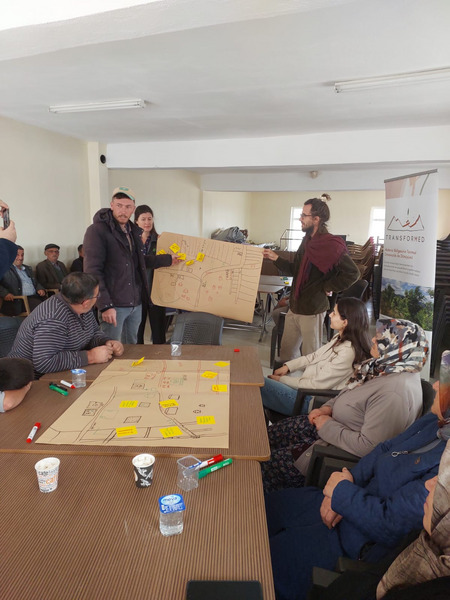
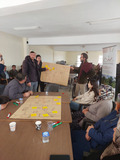
In Burunoba, community members were invited to collectively reflect on the challenges of establishing windbreaks and to identify locally grounded solutions. The workshop began with a participatory mapping exercise to identify key obstacles, followed by a short visioning activity, and concluded with a collective reflection on feasible local solutions to strengthen the long-term management of trees in the landscape. Among the main challenges identified were the use of large agricultural machinery and the application of pesticides, both of which hinder the establishment and survival of windbreaks. Proposed solutions focused primarily on awareness-raising, including stronger collaboration with NGOs and local actors. The outcomes of the workshop are currently being analysed, and the proposed solutions will be further developed.
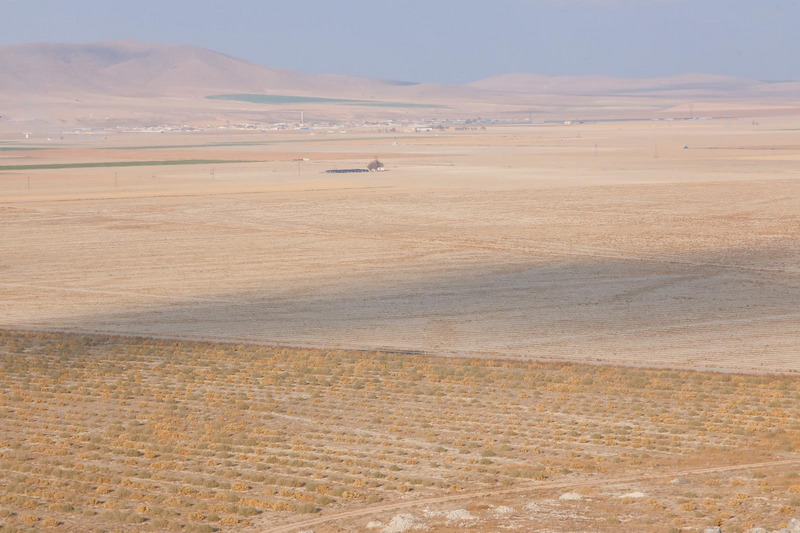
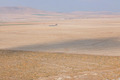
In parallel, similar solution-scanning activities were implemented in the Konya region of Türkiye, an area characterised by an extremely arid climate (200–300 mm of rainfall per year), strong winds, and harsh winters. While pilot initiatives have demonstrated the potential of agroforestry practices—such as windbreaks to reduce wind erosion and shrub-based rangeland enhancement to improve soil and fodder availability—significant barriers remain to scaling these solutions.
Working with local partners DKM and BDIARI, teams from DAC and UK co-developed and facilitated a participatory workshop designed to surface community-driven solutions to tree planting and agroforestry establishment challenges. The approach was structured around three core elements:
- Problem identification, where communities mapped existing and emerging obstacles;
- Community-led solution development, focusing on practical and actionable responses;
- A train-the-facilitator model, enabling local partners to build facilitation skills and lead future workshops independently.
Through an iterative process, the workshop design was refined based on partner feedback and adapted to local contexts, while maintaining its core participatory principles. Conducted in local languages, the workshops ensured cultural relevance and meaningful engagement.
By positioning farmers and communities as co-researchers and solution-holders, these solution-scanning workshops aim to strengthen the foundations for climate-resilient agroforestry and bridge the gap between implementation challenges and locally rooted responses.
 tap and then scroll down to the Add to Home Screen command.