
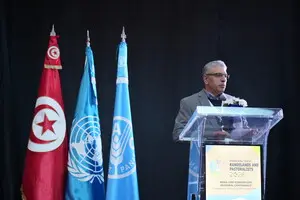

From 26 to 28 January 2026, ICARDA, together with Food and Agriculture Organization of the United Nations, International Land Coalition, IUCN, Sahara and Sahel Observatory, the League of Arab States, CEDARE and the Arab Organization for Agricultural Development convened policymakers, researchers and pastoral stakeholders in Hammamet, Tunisia to build a shared vision for sustainable rangelands and pastoral communities in the Near East and North Africa (NENA).
During the opening session, Dr. Mounir Louhaichi highlighted that rangelands cover between 50% and 70% of land in many NENA countries and that pastoralism remains one of the most sustainable food systems in dry regions. He also stressed growing pressures on rangelands, including climate stress, land degradation, weak governance, insecure tenure and the marginalisation of pastoral communities and their knowledge.
Across three days, participants discussed governance, climate and biodiversity challenges, pastoralist rights, and innovation priorities, exploring integrated approaches to restore rangelands, strengthen livelihoods and improve resilience. A dedicated session led by ICARDA focused on research and innovation needs for the NENA region. Dr. Azaiez Ouled Belgacem underlined key gaps, including fragmented monitoring systems, limited evidence for large-scale restoration in hyper-arid environments, weak native seed supply systems, and governance and tenure constraints. Bridging science and practice was identified as essential to support managers and pastoralists with actionable tools and stronger policy frameworks.
The conference concluded with a field visit to rangeland sites in Zaghouan, showcasing integrated silvopastoral restoration options.
Click HERE for more information on the International Year of Rangelands and Pastoralists 2026 (IYRP2026) in the Near East and North Africa region.
 tap and then scroll down to the Add to Home Screen command.