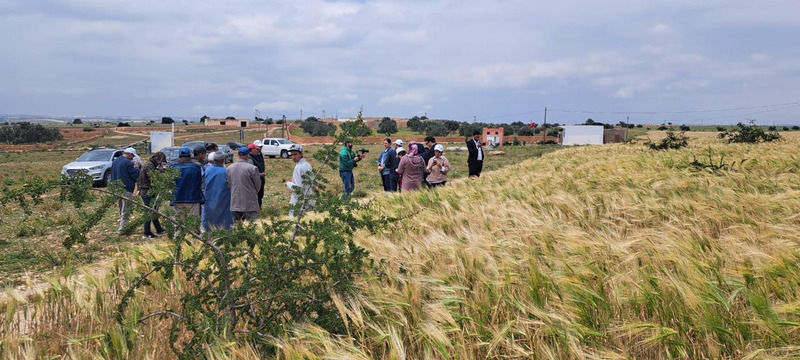
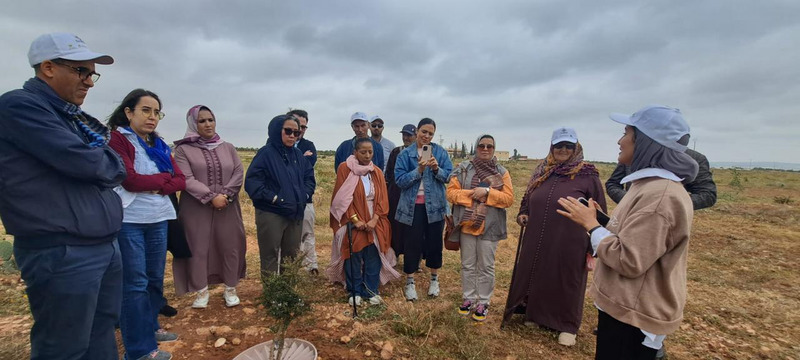
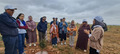
Led by GCF's African Region Director Cathrine Candice Koffman, the delegation visited three project sites implemented by the National Agency for the Development of Oasis and Argan Zones (ANDZOA).
Korimate: community land improvement and shared satisfaction
At the 53-hectare Korimate perimeter, 177 beneficiaries emphasized how previously degraded and underutilized grazing land has been transformed into productive agricultural areas, representing a significant improvement in land use. Beneficiaries noted visible signs of ecosystem restoration, including improved vegetation cover and better soil conditions, with argan plantations playing a key role in land rehabilitation. The community expressed strong optimism about the future potential of the caper production, contributing as additional long-term income source.
TransforMed agroforestry platform: a model for scalable regenerative practices
Adjacent to the DARED project site, the 10-hectare TransforMed agroforestry demonstration platform emerged as a highlight of the visit. Funded by the European Union's PRIMA program, this innovative platform builds on DARED's successful experience to showcase adaptable and scalable models for degraded land rehabilitation. The platform demonstrates multiple agroforestry systems combining argan trees with various species (caper, cactus, and saltbush atriplex) illustrating diverse pathways for sustainable land use in arid conditions.
The ANDZOA team presented advanced technical measures, including Waterbox systems that significantly improve plant survival rates during establishment while optimizing water use in semi-arid environments. This demonstration platform serves as a living laboratory, offering valuable lessons for replicating successful restoration approaches across similar degraded ecosystems.
Lahyatla site: tangible results and economic benefits
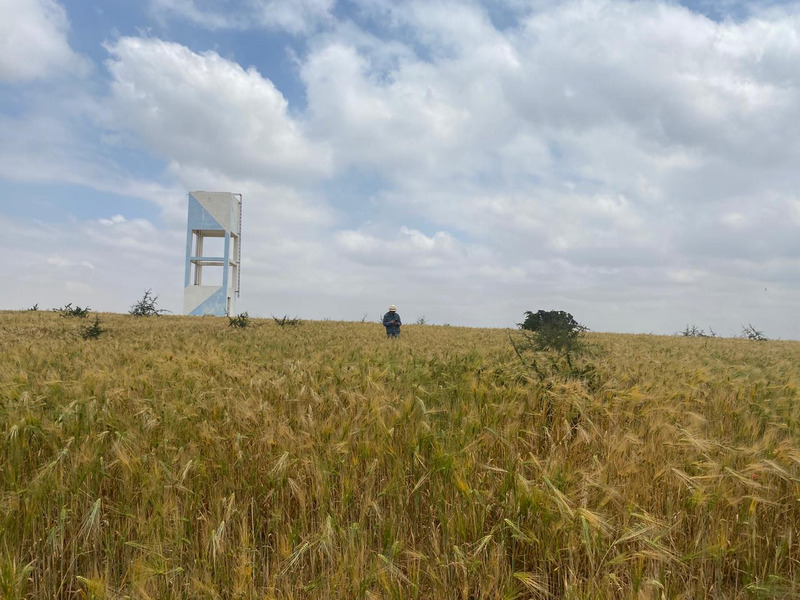
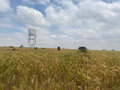
The 54-hectare Lahyatla site, established in 2020, showcase the succesful integration of cereal crops between argan trees. Farmers expressed high satisfaction with tree growth and development, highlighting how this agroforestry model provides both short-term returns through cereal production and long-term gains from argan cultivation. Beneficiaries confirmed that argan trees have already entered production phase, with the first harvest expected this year.
Key Take-Home Messages
The GCF field visit confirmed that both projects are successfully rehabilitating degraded lands through diversified agroforestry systems (argan-caper, argan-cereals), with beneficiaries expressing high satisfaction and the first argan harvests beginning after six years, demonstrating effective income diversification and strong community engagement. The site demonstration platforms showcases replicable models integrating water-saving technologies, addressing land degradation, climate adaptation, and improving rural livelihoods in vulnerable regions.
 tap and then scroll down to the Add to Home Screen command.